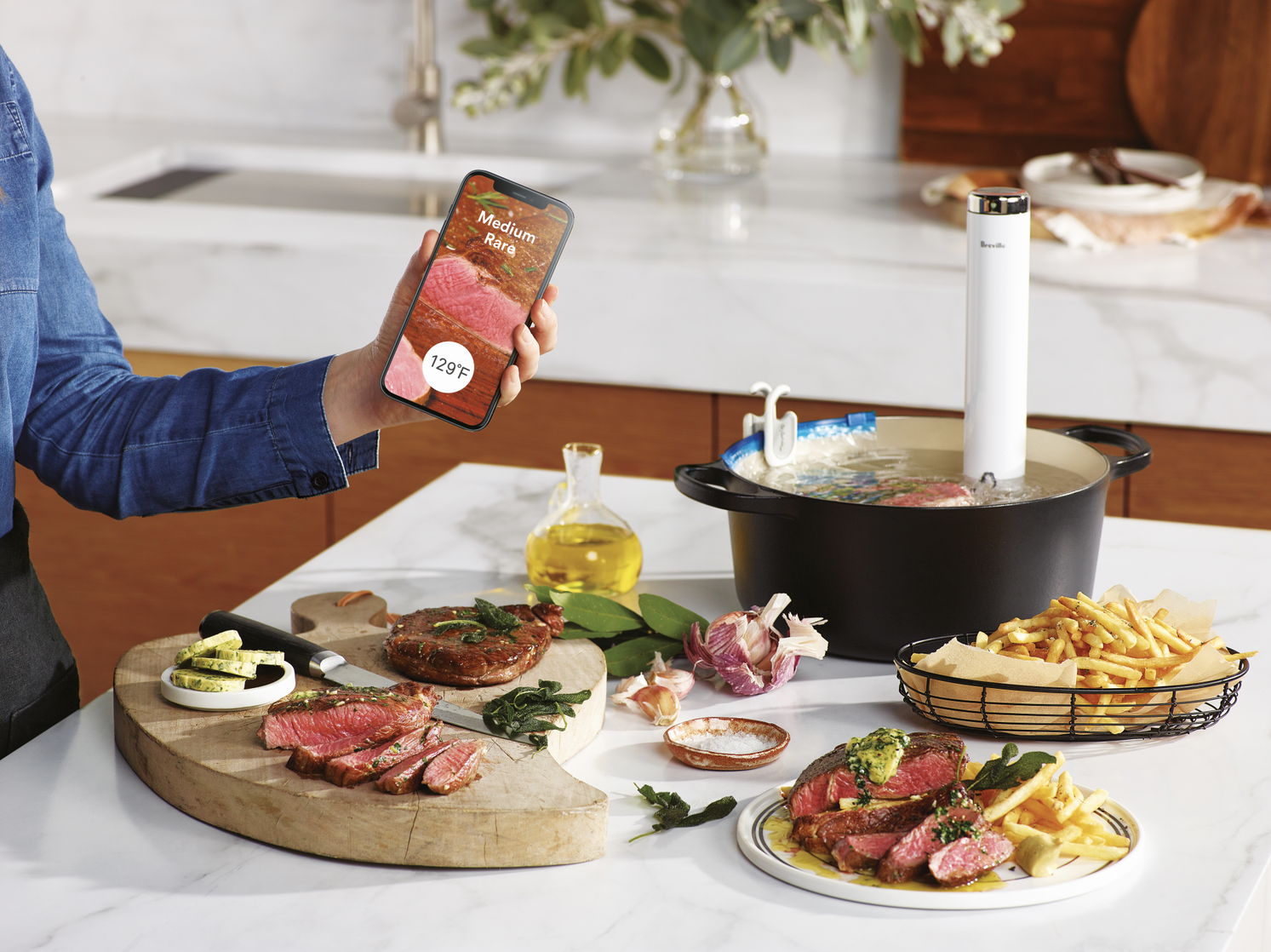
But, truth be told, there’s only one way to cook your steak to a flawless 125-degree medium-rare every single time and to do so without constant supervision.
Sous vide is a technique that transforms cooking into a precise science, serving up consistent, mouth-watering results for every single meal—steak dinners and beyond.
What is sous vide cooking?
Sous vide (pronounced sue-veed) is an ultra-precision, low-heat cooking method that can be used for practically any type of food.
What does sous vide mean?
Translated from French, it means “under vacuum.” And this name captures the essence of the novel culinary technique. According to Bon Appétit:
“At its most fundamental level, sous vide cooking is the process of sealing food in an airtight container—usually a vacuum sealed bag—and then cooking that food in temperature-controlled water…Chefs vacuum seal a protein with marinade, sauce, herbs, or spices and drop it in a large pot of water. There’s no contact with a heated metal surface. No contact with flames or steam, or smoke. The water never comes to a boil.”
The final result?
Food cooked evenly all the way through, no matter its thickness. The outside and inside reach the same desired temperature and can stay that way for hours without being overcooked or inedible.
In short, the sous vide method is a culinary game changer. It takes the guesswork out of cooking and lets you achieve Michelin-star restaurant-quality results in your own kitchen, regardless of your level of culinary expertise.
How does a sous vide machine function?
While there are various types of sous vide machines—ranging from homemade to commercially produced—the core principle remains the same.
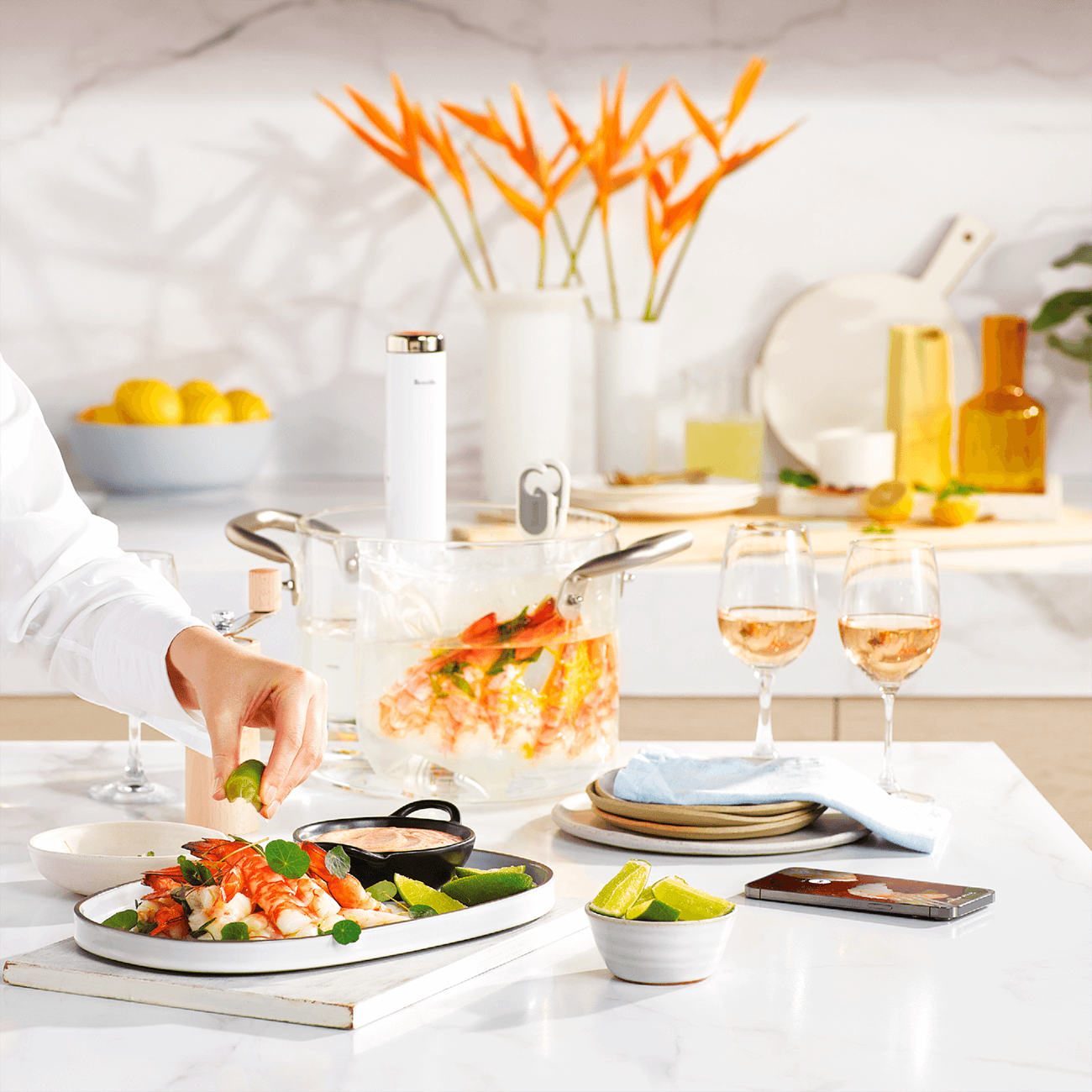
Precise temperature control is key to sous vide. The sous vide machine ensures a consistent temperature within a water bath. Also referred to as an immersion circulator, the sous vide device utilizes a heated metal coil and water circulator to set and maintain a steady temperature in the water. By eliminating any uneven temperature areas, it ensures that the food receives a uniform and constant heating throughout its bath.
Naturally, this method is wildly different from traditional cooking techniques, where the heat source is significantly hotter than the desired final cooking temperature.
For instance, you might set a grill to 450°F to cook a steak to an internal temperature of 125°F. But that’s not how sous vide functions. If you want your chicken breast cooked to 165°F, you set the water bath to 165°F.
Benefits of sous vide
The beauty of sous vide is not just in the technique but in the transformative benefits it brings to your cooking. Some advantages include:
Versatility
No other cooker can do what a sous vide does—not a pressure cooker, slow cooker, smoker, oven, or grill.
A sous vides’ culinary adaptability is simply unmatched. While there are exceptions—mostly for dishes requiring high heat, such as caramel—you can cook practically anything in a sous vide bath.
And, it doesn’t just cook meat perfectly, although that is the most popular application. It can also pasteurize, temper, and ferment at precise temps. From starches to veggies, proteins, and even eggs in all their forms, the diversity of dishes you can perfect with this method is remarkable.
Consistency
Nothing’s more frustrating than spending money on good ingredients and hours prepping and cooking, only for it all to go to waste. Sometimes, conventional cooking can be like playing culinary roulette—you never quite know what you'll get.
But sous vide can transform your cooking experience, taking unpredictability out of the culinary equation. With sous vide, what you aim for is what you get—every single time.
Ease of use
Sous vide cooking, in essence, epitomizes the mantra of "set and forget." It's a method that simplifies the culinary process while still delivering gourmet results, making it one of the most user-friendly techniques, especially for individuals new to cooking.
The steps to sous vide success are straightforward and uniform across all types of food, reducing the learning curve significantly. All you have to do is:
● Season – Add desired spices, herbs, marinades, butter, etc.
● Seal – Vacuum seal the food in a plastic bag, ensuring it’s airtight.
● Circulate – Set the bat to the desired cooking temperature then immerse the sealed bag.
● Sear (if desired) – Once you’re ready to plate, give the cooked food a quick sear.
The only variables are cooking time and temperature.
With sous vide, gourmet cooking is easy and accessible, no matter your culinary skill level.
Scalability
Sous vide is incredibly scalable, perfect for serving large parties or family gatherings. It also liberates you from the stove or the grill to focus on the other elements of the meal. That said, like all good things, a sous vide does have its limits. These are determined by the size of your water bath container and the heating capacity of your circulator. Naturally, these parameters will dictate the quantity of food you can cook at once.
Nonetheless, with a bit of planning and the right equipment, sous vide allows you to elevate your cooking efforts to a scale that would have previously felt overwhelming.
Convenience
Sous vide creates economies of scale in your meal planning. Time that would have previously been spent hovering over the burners or grill can instead be devoted to other aspects of the meal.
In fact, sous vide cooking is like having your own sous chef who takes care of the main course while you pay attention to the details of everything else. The sous vide technique can free you to focus on crafting delicious side dishes and desserts, and give you extra time to enjoy a glass of wine or entertain guests instead of spending too much time in the kitchen.
Sous vide is more than just convenience—it’s culinary peace of mind. Whether it be sous vide steak or sous vide chicken, you know that the final product will be perfectly cooked and require far less work.
Food safety
Sous vide also scores high on food safety. After seasoning and sealing the raw products, sanitizing your kitchen, and letting your food complete its bath, your food will be safe to consume. So long as you follow the guidelines for the time and temperature of a specific product, you can handle the cooked product straight from the bag.
Additionally, with food-grade vacuum seal bags, you don’t have to worry about the safety of cooking your food in plastic. Because food-grade vacuum seal bags are made of polyethylene, they’re BPA-free, meaning the heated plastic won’t release the chemical Bisphenol A into your meal.
Meal prep
Always use a vacuum bag with a vacuum seal. The vacuum sealing process used in sous vide not only ensures an even and thorough cook but also significantly extends the shelf life of your protein; a sous vide-cooked meal can easily last a week sealed in the fridge without losing its freshness or flavor, making it an ideal way to meal prep.
With a bit of foresight, you can have a gourmet meal ready in minutes any night of the week. Simply let your pre-cooked meat come to room temperature, give it a quick sear for a restaurant-quality finish, and voila! You have an impressive dinner with minimal effort and no mess.
Drawbacks of sous vide
Truth be told, there aren’t many drawbacks to sous vide. The only issues you may encounter are:
● Time – The main hurdle for most individuals is the time it takes to cook sous vide. As mentioned, sous vide is a slow cooking method—a culinary marathon, not a sprint.
● Appearance – Although your food will emerge at the perfect temperature, it may come out of the bag lacking the coloring and charring most people associate with finished foods, especially for proteins. This is why most recipes will suggest that you perform a quick sear prior to plating.
● Initial investment – Whether you're taking the DIY route or buying a pre-assembled unit, you’ll need to invest in a sous vide set-up to get started. Chances are, this will cost anywhere from $100 to $500, depending on the machine’s specs and capabilities.
Cook smarter with the Joule® Turbo sous vide
Want to start cooking on easy mode?
Then sous vide is the answer—the solution for a perfectly cooked meal, no matter what the recipe calls for.
And, now, thanks to the Joule Turbo Sous Vide cooker from Breville, the sous vide process doesn’t have to be a painstakingly slow affair. Our proprietary Turbo technology allows you to make selected dishes in half the time of conventional sous vide, and do it hands-free.
If you’re ready for perfect results, put cooking on autopilot with Breville’s Joule Turbo Sous Vide cooker. Discover more on sous vide cooking here.
Sources:
1. Bon Appétit. What Is Sous Vide Cooking? https://www.bonappetit.com/story/what-is-sous-vide-cooking
2. Food & Wine. Sous Vide Cooking at Home Is Easier Than You Think. https://www.foodandwine.com/lifestyle/kitchen/sous-vide-cooking-explained
3. Bon Appétit. Is It Safe to Cook With Plastic Bags? And Other Sous Vide Questions, Explained. https://www.bonappetit.com/story/plastic-bag-safety-sous-vide