From the blistering heat of brick ovens to the convenient compactness of countertop cookers, different pizza ovens all offer their own unique benefits. Likewise, some types are better suited to producing specific styles of pizza than others.
If you’re trying to decide on a pizza oven to execute your long list of pizza oven recipes but don’t know the difference between conveyor and convection, we’re here to help. To help you decide what’s right for your purposes, we’re breaking down the different types of pizza ovens, determining their strengths and weaknesses, and offering some suggestions for when to use each.
#1 Convection
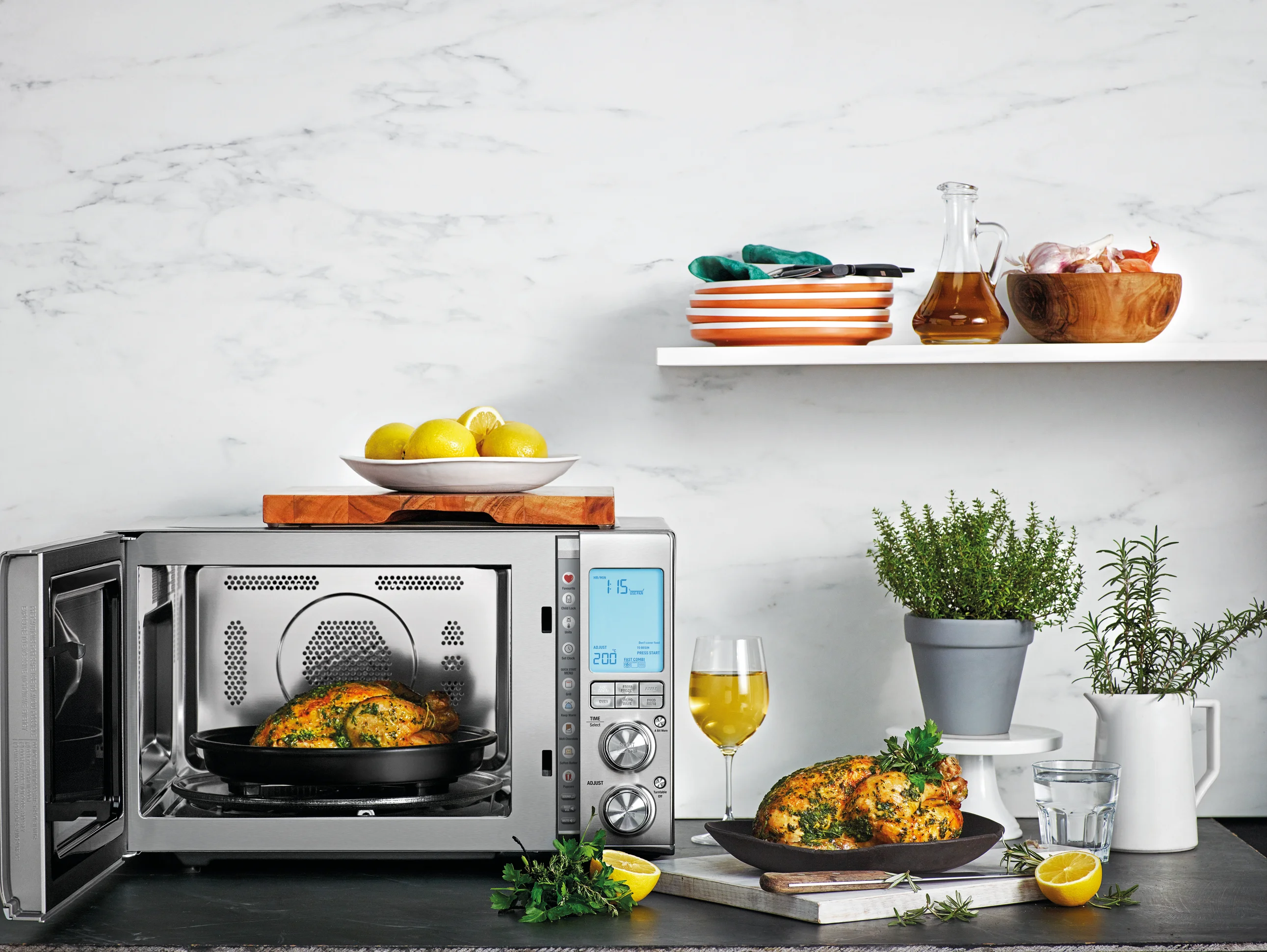
Convection ovens work by pushing hot air through their interiors. A fan blows blistering breezes in while an exhaust manifold vents them out. This type of cooking can offer some distinct benefits over other methods, including:
● Temperature consistency – Constantly exchanging air means heat doesn’t build and surpass your desired pizza oven temperature. This reduces hot spots within the oven and leads to a more consistent, even cook across the surface of your pizza.
● A quicker cook at a lower temperature – Some types of pizzas, such as bready, rustic pizzas, can benefit from baking at a lower temperature versus thin and crispy crust styles—which are generally cooked for a shorter time with more heat. Convection pizza ovens can help these homestyle varieties rise more quickly by hitting every inch of their surface with heat.
However, when prepping a pizza in a convection oven, bakers may be subject to these distinct drawbacks:
● Lower heat – The nature of convection ovens’ forced-air design doesn’t allow them to reach the high temperatures at which some of the world’s most beloved pizza varieties, such as Neapolitan, are cooked. Generally, traditional pizza ovens fire between 700 and 1,000 ℉. More often than not, commercial convection ovens simply can’t hit these thermometer-testing temperatures.
● Reduced humidity – Humidity can actually make things better when cooking pizzas. A humid baking environment allows leavened baked goods, like bread and pizza, to become fluffy and airy inside without their exteriors drying up to a cracker-like consistency. The ever-blowing air inside a convection oven, however, wicks away moisture and can cause pizza dough to become shriveled and craggy.
● Paler crusts – Interestingly, while evenly-heated air makes for a consistent cook, it also leads to a patently pale crust. More intense, less meticulously distributed heat is what causes those char marks that adorn the underside of a perfectly-fired pizza.
Ultimately, convection can be a decent choice for pan pizzas, Sicilians, and other dense styles. Just don’t expect a crispy crust and bits of browned cheese when cooking with such ovens.
#2 Brick
Handcrafted brick ovens are what pizza lovers typically associate with high-end, high-quality pizzerias that produce the most delicious and memorable pizzas.
Brick ovens are generally fuelled by a roaring fire enclosed in a dome of heat-resistant mortar tiles. These hearths are the heart of upscale Italian eateries, and they produce a delicious pizza by combining three types of heat:
● Convection – As noted, convection cooking is the process of blowing hot air over food. The open front of brick ovens allows air to enter in, pick up heat and speed as it funnels into the fire, and circulate around the pizza as it follows the curve of the interior.
● Radiant – In a wood oven, heat emanates from the source (fire) through the transfer medium (air) to bake pizza through radiant cooking. Unlike convection, there’s no breeze to push air—meaning radiated heat more or less comes from one direction, rather than all around.
● Conduction – Conduction occurs when heat travels through a solid material to cook food directly. In a brick oven, the stone bottom that the pizza rests on should reach around 210 ℉ to give the crust the perfect amount of char over a 2-minute cook time.
Combining these three types of heat results in an entirely unique cooking process that, when done correctly, produces perfect pizzas. Thus, brick pizza ovens present some distinct advantages that are difficult to replicate with other cooking methods, such as:
● Lightning-fast cook times – Brick ovens’ hot, hot heat (700-1,000 ℉) means they can crank out pizzas in two minutes or less while improving, rather than reducing, quality.
● Smokiness – The plumes billowing out of a brick oven’s fire not only provide heat—they also impart the pizza with a signature smoky flavor that’s characteristic of open flames.
● Crisp, leopard-spotted crust – The char-speckled bottom of a perfectly fired pizza is the envy of home pizza chefs worldwide. The flaming-hot floor of brick ovens creates a pleasingly crunchy crust with a perfect amount of chew to back it up.
While brick ovens produce some truly superlative slices, they also come with a few distinct downsides, including:
● Size – Brick ovens are massive, and restaurants are often designed around them. Most homeowners would likely have to sacrifice half of their backyard to squeeze one onto their property.
● Cost – Alongside size, brick ovens also come with gargantuan costs. The immense price of materials, a reputable craftsman with oven-building experience, and endless bundles of wood typically aren’t feasible for the average home chef.
If a brick oven does fit your situation, you’ll soon be baking some exceptional thin-crust pizzas—such as mouthwatering Margheritas and other styles of Neopolitan. However, if space and money are limiting factors, there are other viable options to consider.
#3 Pizza decks
Pizza decks are purpose-built, compact units that aim to mimic the environment of a traditional wood-fired oven in a smaller space. They range in size and functionality, but they can generally blast between 300 and 700 ℉ of heat. Thus, they usually touch the very precipice of that special range where wood-fire works its magic.
For this reason, such ovens present a plethora of similar advantages, including:
● Perfect crust – While they may not replicate the crispiness and chewiness of wood fire to a T, pizza decks nevertheless produce a crunchy, toothsome crust.
● Crispy toppings – The high heat of pizza decks can crisp up pepperoni and brown cheese perfectly, and take vegetables from raw to juicy and bursting with flavor.
Decks present a distinct benefit over wood-fires as well:
● Saved space and money – While most homeowners would have to choose between outdoor furniture or a brick oven for their patio, many pizza decks fit conveniently atop a counter and come at a fraction of the price.
While these modern marvels of pizza production turn out some pretty pleasing pizzas, they do present some downsides, including:
● Speed – If turning out a high-quality delicious pizza in two minutes flat is of the utmost importance to you, your pizza deck may not be able to keep up with the job. Generally, most decks take about five minutes to fully bake a pizza.
● Lack of smokiness – Pizza decks are powered by electric elements or clean-burning gas. Thus, that signature touch of smoke that defines a wood-fired pizza isn’t present with such ovens.
Despite these downsides, pizza decks are the best options for home chefs seeking to produce authentic, delicious pizzas of all kinds in the comfort of their own homes.
Discover Breville’s compact pizza decks
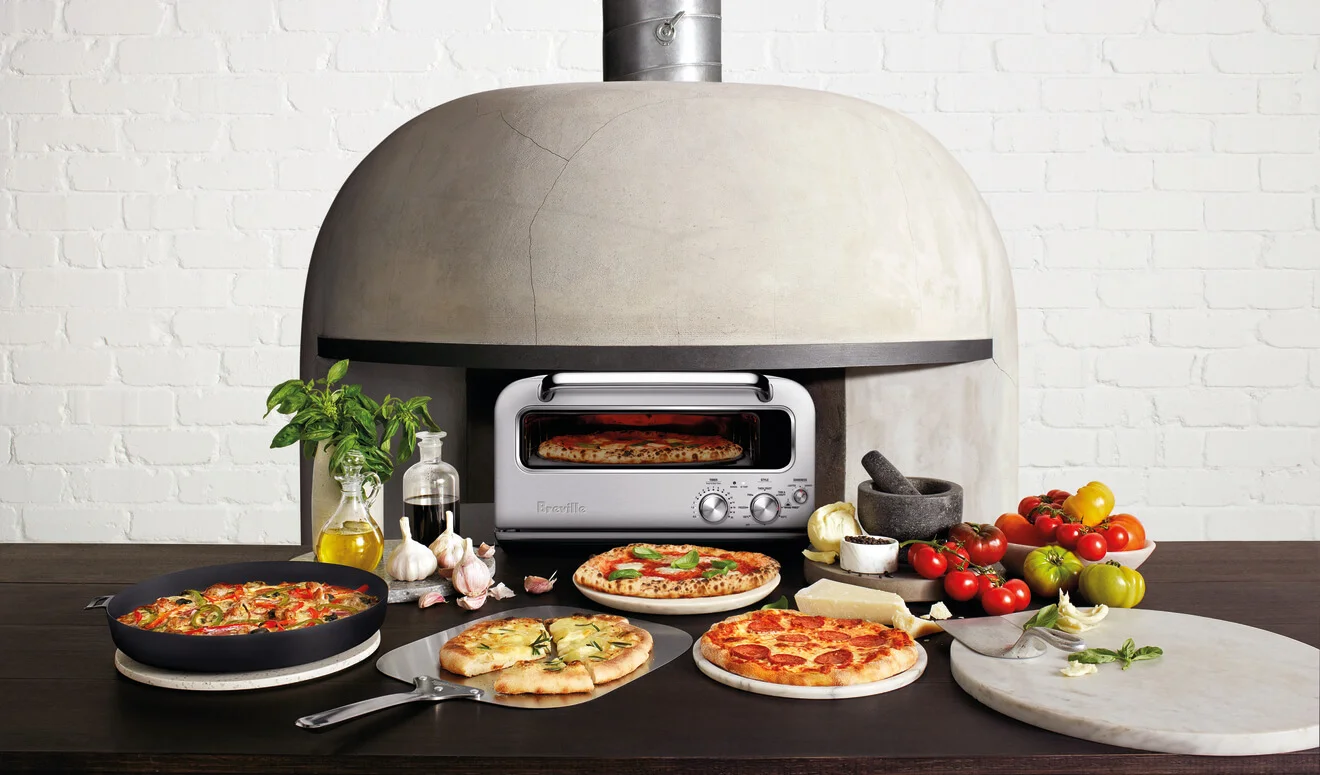
While decks are the go-to for home bakers looking to perfect their pizza della casa, they’ve long produced pizzas that approach, but don’t replicate, wood-fire quality. That was, until Breville created the Smart Oven® Pizzaiolo.
Pizzaiolo is the Italian term for a skilled artisan of pizas and slices, and we wholeheartedly believe our one-of-a-kind pizza deck lives up to its name.
Unlike other countertop models, the Pizzaiolo breaks well into the same fiery range of brick ovens by reaching a full 750 ℉. The result is exceptional leopard-spotting and an immaculate touch of char that mimics the signature smokiness of wood fire.
On top of these hot benefits, the Pizzaiolo also boasts a full menu of other offerings, including:
● The potential to bake pizzas in just two minutes
● The use of convection, conduction, and radiant heat to closely replicate the baking environment within a wood oven
● The ability to cook all types of pizzas, from authentic New York pizzas to your favorite frozen varieties
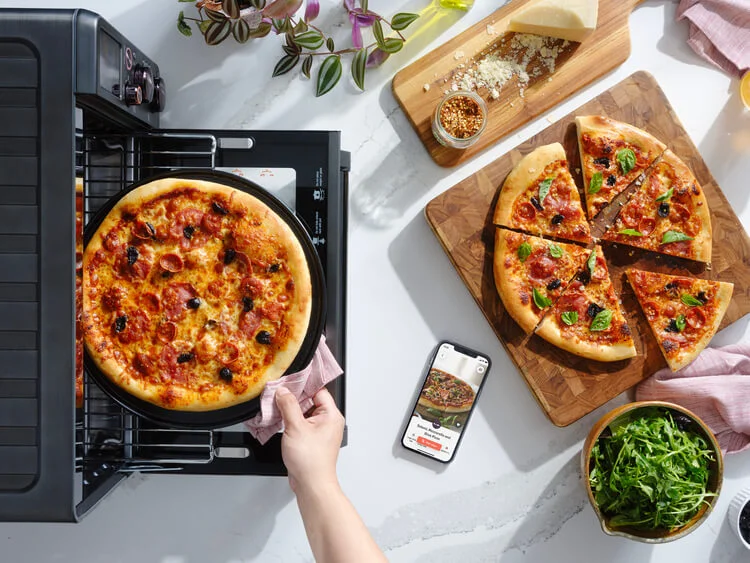
The Pizzaolo’s apprentice, the Crispy Crust™ Pizza Maker, also turns out genuine stone-baked pizzas in just minutes. Its blazing hot interior reaches a ripping 572 ℉, enough to get glorious leopard-spotting atop our unique stone deck technology. And, for more helpful tips on baking in your pizza oven, check out Breville+, which houses over 1,000 guided recipes, cooking classes, and cook guides.
If you’re looking for a countertop pizza oven to give authentic Italian pizza masters a run for their Euros, tie up your apron and bake something beautiful with Breville.
Sources:
1. Michigan State University. The ins and outs of convection ovens. https://www.canr.msu.edu/
2. Science of Cooking. Why is humidity important in cooking?. https://www.scienceofcooking.com/
3. Varlamov, Andrey, Glatz, Andreas, and Grasso, Sergio. The Physics of baking good Pizza. https://arxiv.org/
4. National Aeronautics and Space Administration. Traditional Radiation Heat Transfer. https://ntrs.nasa.gov/
5. PMQ Pizza Magazine. Idiot-Proof Ovens: Why Conveyors Remain a Popular Choice for Pizzerias. https://www.pmq.com/
6. Foodservice Equipment and Supplies Magazine. A Guide to Deck Ovens for Pizza Restaurants. https://fesmag.com/
7. Smithsonian Magazine. Inside Naples' World-Famous Pizza Culture. https://www.smithsonianmag.com/